

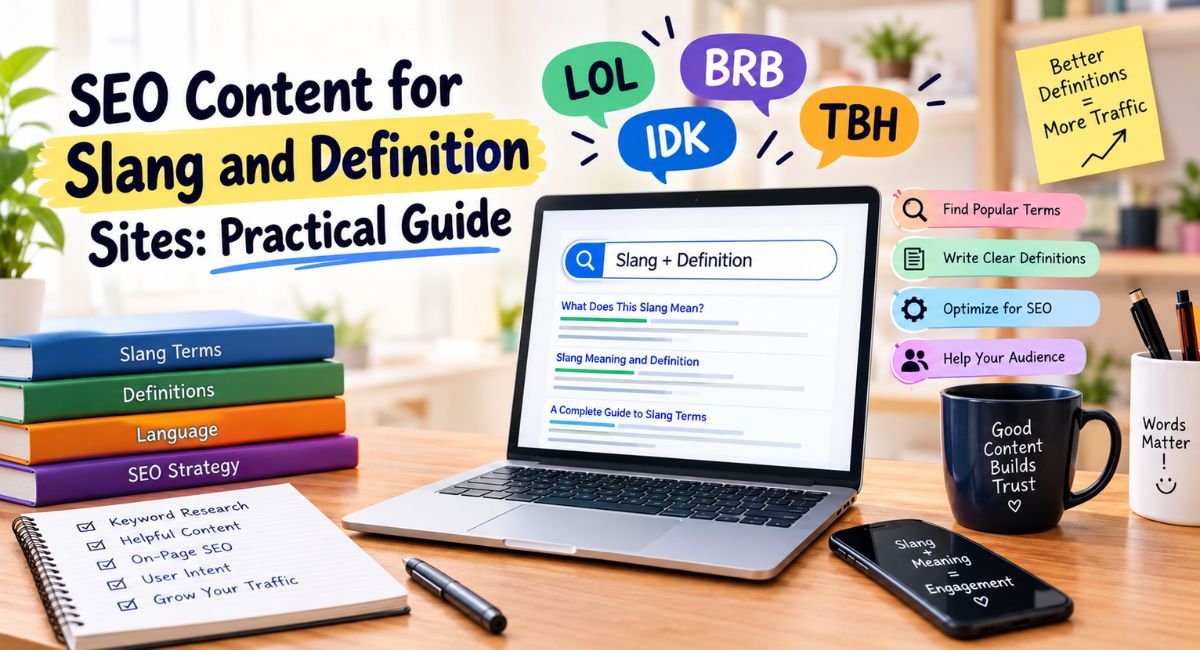
SEO Content for Slang and definition websites look simple from the outside. Someone searches “what does this abbreviation mean,” lands on your page, gets the answer, and leaves. But that quick answer is exactly why this niche is hard. Search engines can now show short definitions directly in the results, so a page that only repeats a one-line meaning gives people little reason to click.
The good news is that definition sites can still grow. The pages that win are the ones that answer fast and then add something a search box cannot: context, examples, and clear structure. This guide walks through how to do that.
Understand Why People Search for Meanings
Most people searching for a slang term are in the middle of a conversation. They saw an abbreviation in a message, a comment, or a video, and they want to reply without looking lost. That tells you three things about your reader:
- They want the answer in the first few seconds.
- They want to know how the term is actually used, not just what it stands for.
- They often worry about tone: is this friendly, rude, or something else?
Write for that person. Put the direct meaning at the top, then explain tone and situations where the term is used.
Find Topics With Competitor Keyword Gap Analysis
Guessing which slang terms to cover is slow and unreliable. A competitor keyword gap analysis is faster. The idea is simple:
- Pick three to five sites in your niche that publish similar content.
- Export their top pages and the keywords those pages rank for.
- List the terms that bring them traffic but that you have not covered yet.
- Note pages where a competitor has lost rankings. Those are often the easiest openings.
- Remove anything off-topic, low-value, or unsuitable for your audience before you write a word.
That last step matters. Not every high-volume term is worth publishing, and a clean, focused site is easier for both readers and search engines to trust.
Structure Each Definition Page for Readers First
A reliable page structure keeps every article consistent and easy to scan:
- Quick answer: one or two sentences with the meaning, right under the title.
- Full meaning: a slightly longer explanation, including where the term comes from if that is known.
- Real usage examples: short sample messages or comments that show the term in context.
- Tone and cautions: when the term is casual, when it could sound rude, and any common misunderstandings.
- Similar terms: a short list of related slang readers might mix up.
- FAQ: two to four real questions people ask about the term.
The usage examples are the part most thin sites skip, and they are the part readers remember.
A Real Example of This Process
We use this exact workflow on MeaningByte, a slang, abbreviation, and grammar reference site. New topics come from competitor gap analysis, each article follows a fixed structure, and older pages are revisited as search results change. The point is not volume. It is having a repeatable process so every page is built the same careful way.
Add Small Interactive or Practical Elements
Where it makes sense, give readers something to do, such as a short quiz or a simple “does this fit the situation” check. These elements keep people on the page longer and make your content more useful than a plain definition. Keep them light. They should support the article, not distract from it.
Common Mistakes to Avoid
- Copying definitions from other sites. Search engines can tell, and readers can too. Write your own explanation.
- Publishing very short pages. A one-line answer with nothing around it rarely earns a lasting ranking.
- Ignoring tone and safety. Some slang has offensive or adult meanings. Cover terms carefully and skip topics that do not suit your audience.
- Never updating. Slang changes quickly. Review popular pages regularly.
- Chasing every keyword. Choose terms you can explain well, not just terms with big numbers next to them.
Conclusion
Writing SEO content for slang and definition websites comes down to a few habits: understand what the reader needs, choose topics with real research, give every page a clear structure, and keep improving what you publish. If you run a definition site, or plan to start one, a repeatable process will always beat guesswork.
Need help building content like this for your own website? Get in touch with Elite Aneesa and tell us what you are working on.
FAQs
Why is it harder to rank definition pages now?
Search engines can show short definitions directly in the results, so pages with only a one-line answer get fewer clicks. Adding examples, tone guidance, and context gives readers a reason to visit.
How do I find slang terms worth writing about?
Use a competitor keyword gap analysis. List the terms rival sites rank for that you have not covered, then filter out anything off-topic or unsuitable for your audience.
How long should a slang definition page be?
Long enough to answer the question fully and add usage examples, tone notes, and a short FAQ. Focus on usefulness rather than a fixed word count.
Should I update old definition pages?
Yes. Slang changes quickly, so review popular pages regularly and refresh meanings, examples, and related terms.

**About EliteAneesa**
Welcome to **EliteAneesa**, a platform dedicated to high-quality blogging and guest posting. Our mission is to provide insightful, SEO-optimized content while offering writers and businesses an opportunity to share their expertise. Whether you’re looking to publish a guest post or purchase an author account, **EliteAneesa** helps you grow your online presence and authority.
🚀 **Write. Publish. Connect.** 🚀
👉 **Join us today!**